

The creation of Alder SAF100 produces a 100% sustainable jet fuel by blending hydrotreated Alder Renewable Crude (ARC) with smaller volumes of HEFA-SAF. Fully biogenic, it delivers higher energy density, improved low-temperature performance, and cleaner combustion. This underscores the potential of Alder’s ARC platform to enable refiners to scale next-generation SAF from biomass and support aviation’s decarbonization goals.
Unlocking 100% SAF
The aviation industry is one of the hardest to decarbonize. While passenger numbers continue to rise, new propulsion technologies such as electrification and hydrogen remain years from commercial deployment. Scalable, sustainable liquid fuels are therefore essential to achieving climate goals.
Alder SAF100 demonstrates that a fully biogenic jet fuel can be produced by combining ARC hydrocarbons (majority) with HEFA-SAF (minority). The result is a 100% sustainable fuel that replicates the performance of fossil jet fuel while delivering significant carbon intensity reductions.
Alder partnered with Washington State University (WSU), Honeywell UOP, the U.S. Department of Energy’s National Renewable Energy Laboratory, and World Energy. Hydroprocessing and distillation were completed with technical support from Honeywell UOP, fuel property prescreening at WSU, and independent finished fuel testing at Southwest Research Institute (SwRI).
Technical Insights
Early testing and analysis reveal promising results:
Together, these properties position Alder SAF100 as a strong candidate for replacing petroleum-derived jet fuel without compromising on safety or performance.
Industry Perspectives
“We are delighted to support Alder’s efforts to commercialize Alder SAF100. This iterative prescreening approach de-risks scale-up and highlights opportunities to accelerate development milestones,” said Josh Heyne, Director of the Bioproducts, Sciences, and Engineering Lab at WSU.
“Unlocking 100% SAF is essential for the aviation sector to meet its decarbonization targets,” said Zia Abdullah, Laboratory Program Manager for Bioenergy at NREL. “Alder’s ARC platform shows clear potential to provide the right molecular mix at scale.”
Looking Ahead
Alder SAF100 demonstrates how our ARC platform can serve as a scalable foundation for next-generation SAF. While more work remains to scale production and integrate with refiners, this milestone illustrates the technical feasibility and performance potential of 100% biogenic jet fuel.
Building momentum with technology validation, strategic partnerships, and new projects

We are proud to announce that Stephen Schueler, former Chief Commercial Officer at A.P. Moller - Maersk, has joined the company as a Strategic Advisor and Shareholder. Stephen currently serves as Managing Director, Green Transition, Investment Advisory Board at European Maritime Finance, focusing on sustainable shipping investment strategies. He is on multiple leading global boards as a shareholder and trusted advisor.

Alder Renewables, BASF, National Laboratory of the Rockies, and North Atlantic Refining co-authored a new Hydrocarbon Processing article on coprocessing Alder Renewable Crude in fluid catalytic crackers. The work highlights a practical pathway to produce renewable fuels with existing refinery assets, improved handling, better storage stability, strong yields, and biogenic carbon integration for today’s energy infrastructure at commercial scale globally.
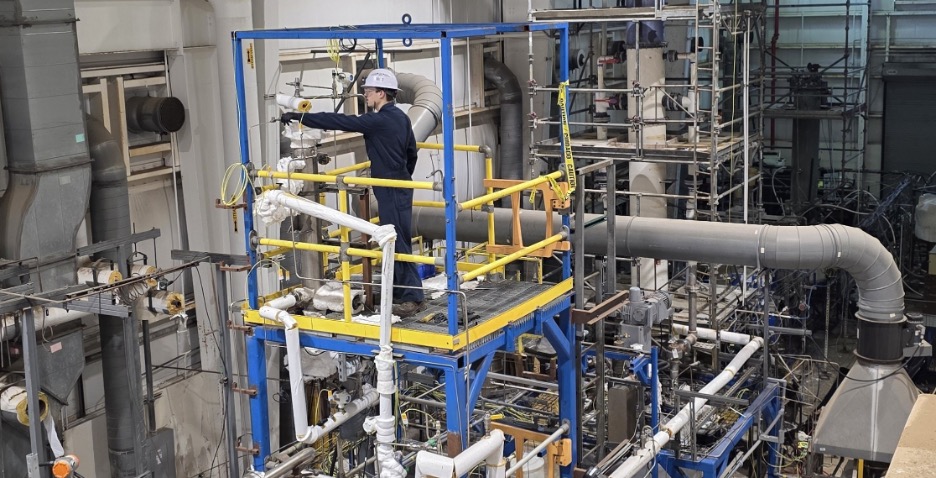
Project Avance demonstrates a scalable, cost‑effective path to advanced biofuels by converting forestry residues into refinery‑ready ARC. The pilot campaign met performance targets, showing scientific and operational progress. By leveraging existing pyrolysis and refinery infrastructure, the approach reduces costs, enhances energy security, and proves abundant biomass can deliver viable low‑carbon fuels.


All rights reserved